
about the project

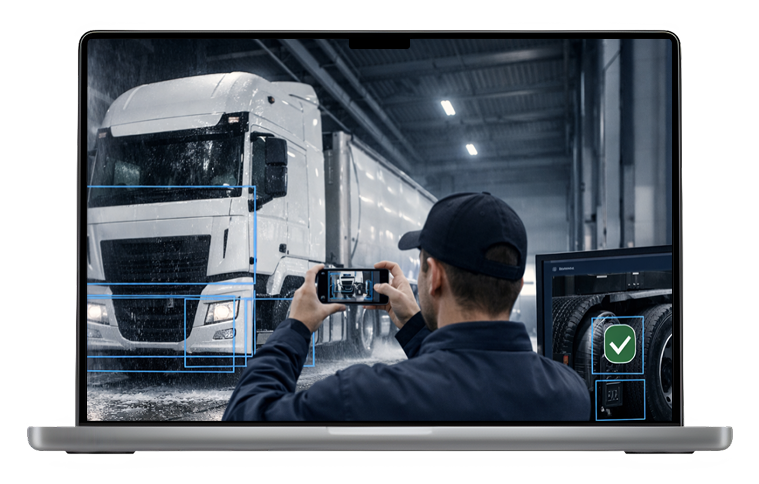
We developed a solution for automated verification of ordered services based on photographs in an auto service environment. The system, powered by AI, computer vision, and web services, analyzes photo reports for tire service and vehicle washing, identifies the services performed, evaluates quality, and helps detect fraud.
The project was implemented for a major logistics company that processes several thousand photo reports every day.
project goals
– reduce the time required for manual review of thousands of photo reports;
– minimize the impact of human error and subjective judgment;
– automatically verify whether all services were completed and whether the quality meets requirements;
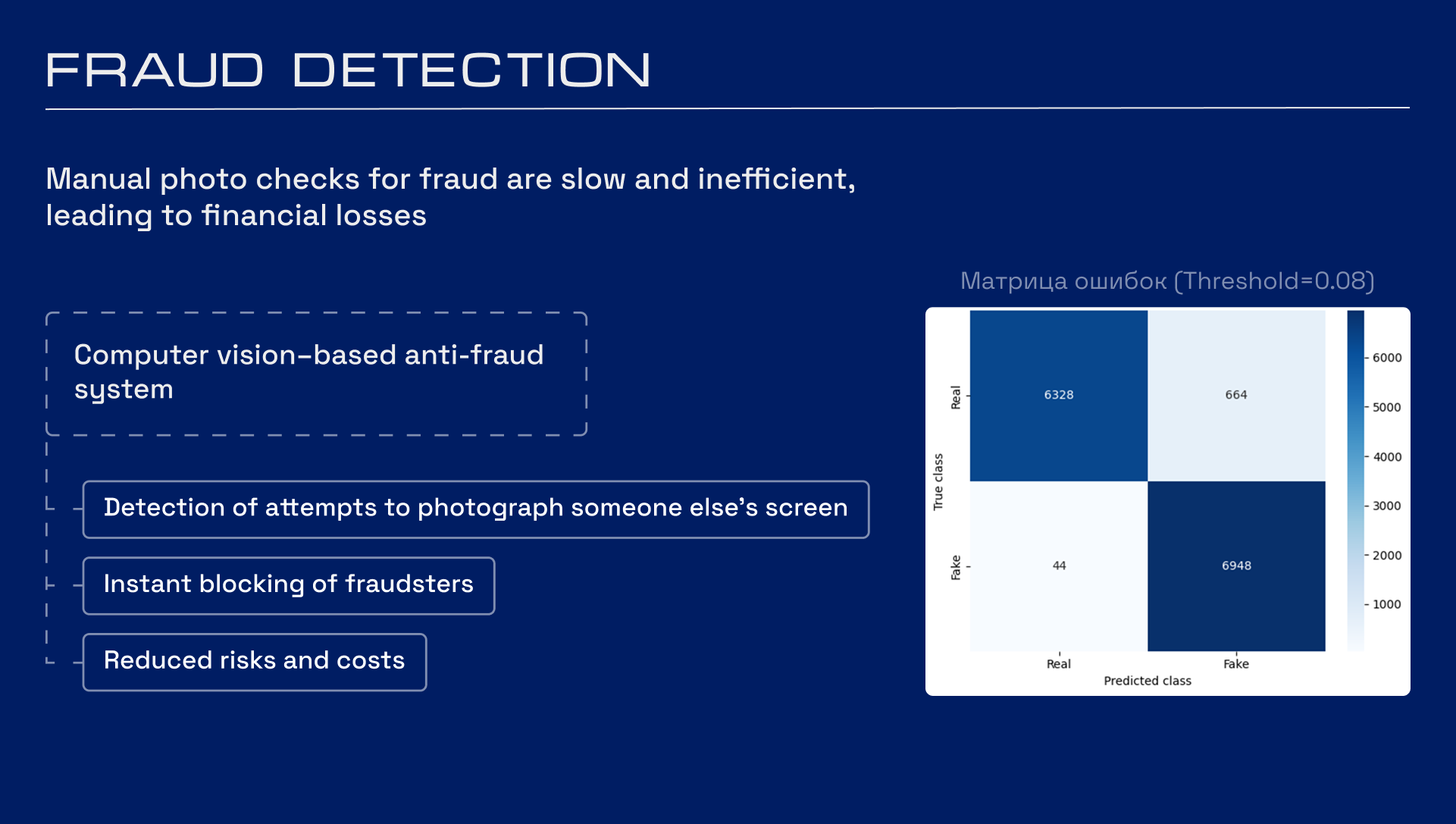
– detect fraud involving fake photos;
– reduce operating costs and improve the objectivity of quality control.
solution
We developed a flexible automated verification system based on computer vision models.
The system analyzes photos uploaded by technicians and automatically:
– identifies completed services;
– evaluates the quality of the work;
– verifies photos without human involvement.
The solution covers:
– 21+ tire service operations, including wheel balancing, valve replacement, tread cutting, and other types of work;
– 36 washing services and 27 vehicle models, including semi-trucks, trucks, trailers, grain carriers, and other types of transport.
Additionally, we implemented a computer vision–based anti-fraud module for automatically detecting attempts to photograph someone else’s screen.
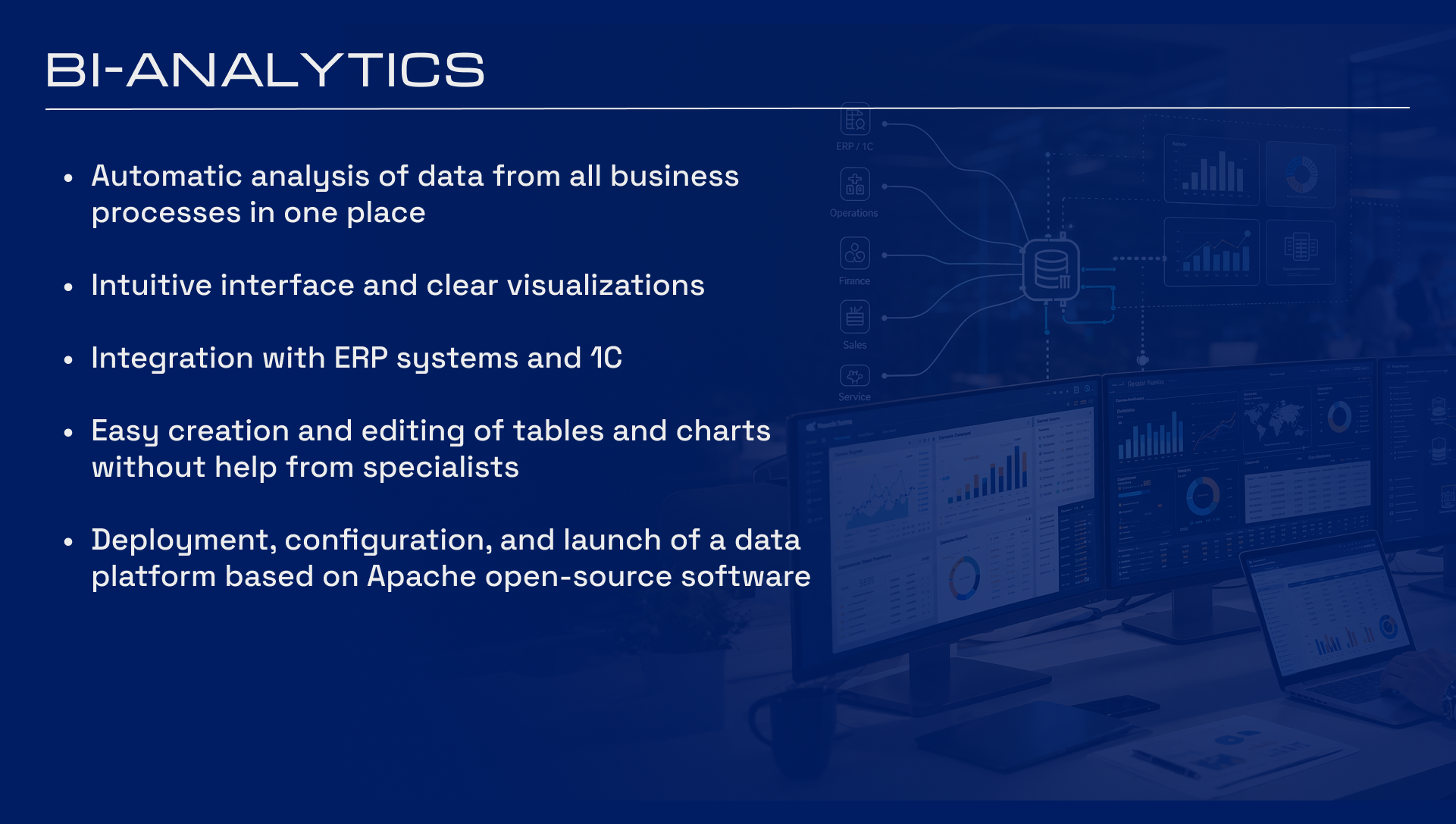
The project also included BI analytics: automated analysis of data across business processes, visualizations, and integration with ERP and 1C systems.
technology stack
result
– automated verification of thousands of photo reports for tire service and vehicle washing;
– reduced workload on employees and minimized the influence of the human factor;
– improved objectivity in quality control of completed work;
– implemented an anti-fraud mechanism to detect fraud and reduce financial losses;
– created a unified BI environment for analyzing data from different business processes.

